Exploration of these blue frontiers increasingly demands a thoughtful approach that seamlessly combines conscious conservation, immersive adventure and mindful luxury. With the anticipated release of Blue Planet III later this year, these four exceptional marine destinations offer rare, transformative encounters that delve beneath the surface.
World Oceans Day, marked each June, feels especially resonant this year as Sir David Attenborough celebrates his 100th birthday—a milestone for the man who has done more than anyone to bring the wonders of the deep into focus. His enduring observation that “the most important place on Earth is not on land, but at sea” remains as urgent as ever. Our oceans, often described as the planet’s ‘blue lungs’, generate half of the oxygen we breathe and absorb nearly a third of global carbon dioxide emissions, making them both vital climate regulators and extraordinary reservoirs of biodiversity.
Praslin’s granite labyrinths
Giant granite boulders create a labyrinth of swim-throughs, ethereal overhangs and deep canyons where the interplay of light and shadow showcase a kaleidoscope of sea creatures and soft corals. As Praslin is a high-biodiversity zone, chances of seeing over 800 marine species on a single dive are high, among them Grey Reef Sharks, Manta Rays and Yellowfin Tuna. This is why the Seychelles is among the best luxury diving destinations in the world, while committing to sustainable luxury travel that protects marine ecosystems.
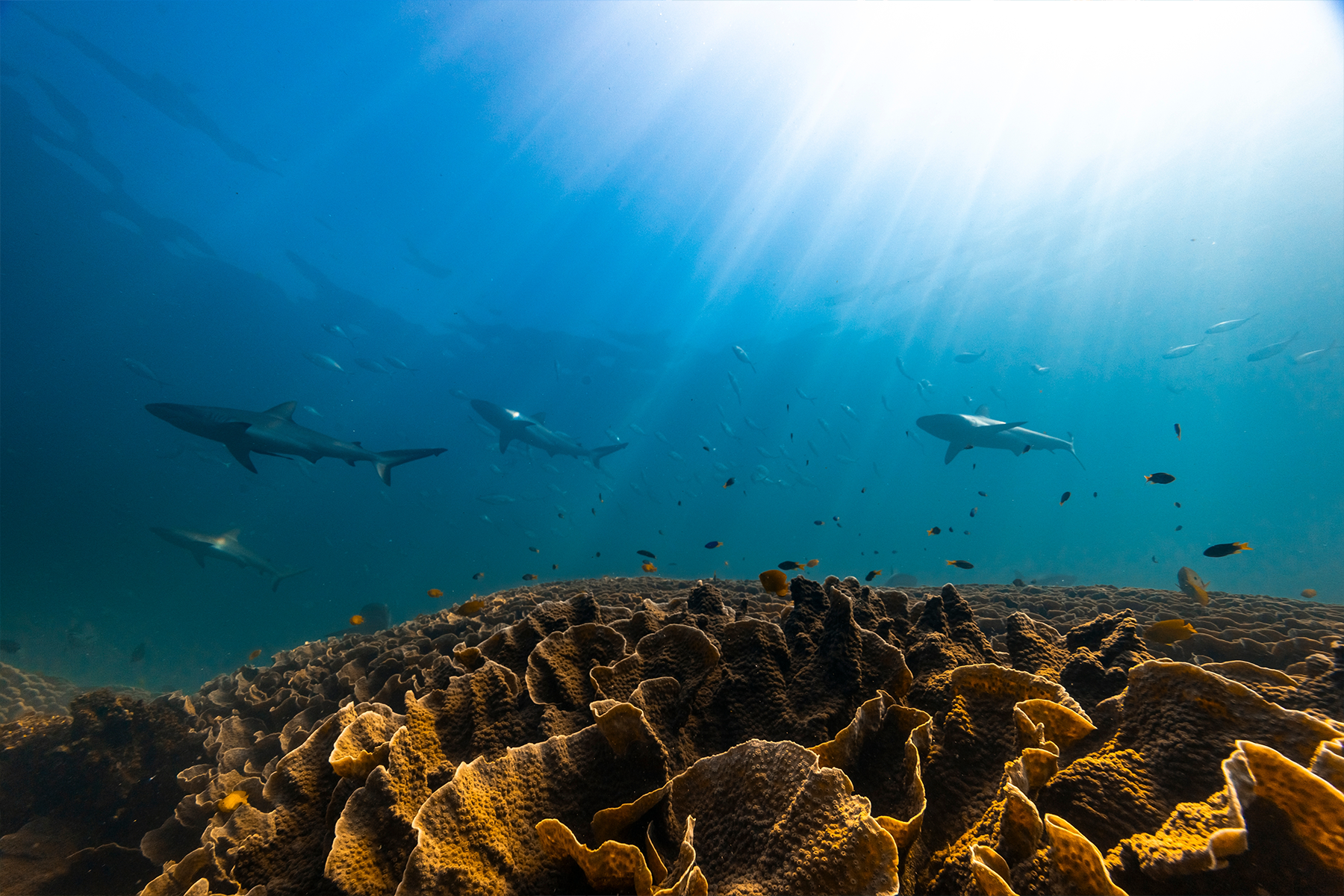
Sharks patrol the coral reefs surrounding Praslin, Seychelles
This is true of the eco-conscious Raffles Seychelles that borders the luscious Vallée de Mai Nature Reserve – a UNESCO World Heritage Site home to the rare Coco de Mer Palm. Across the cerulean water, the resort overlooks Curieuse Marine National Park – an important nesting site for Hawksbill Turtles.
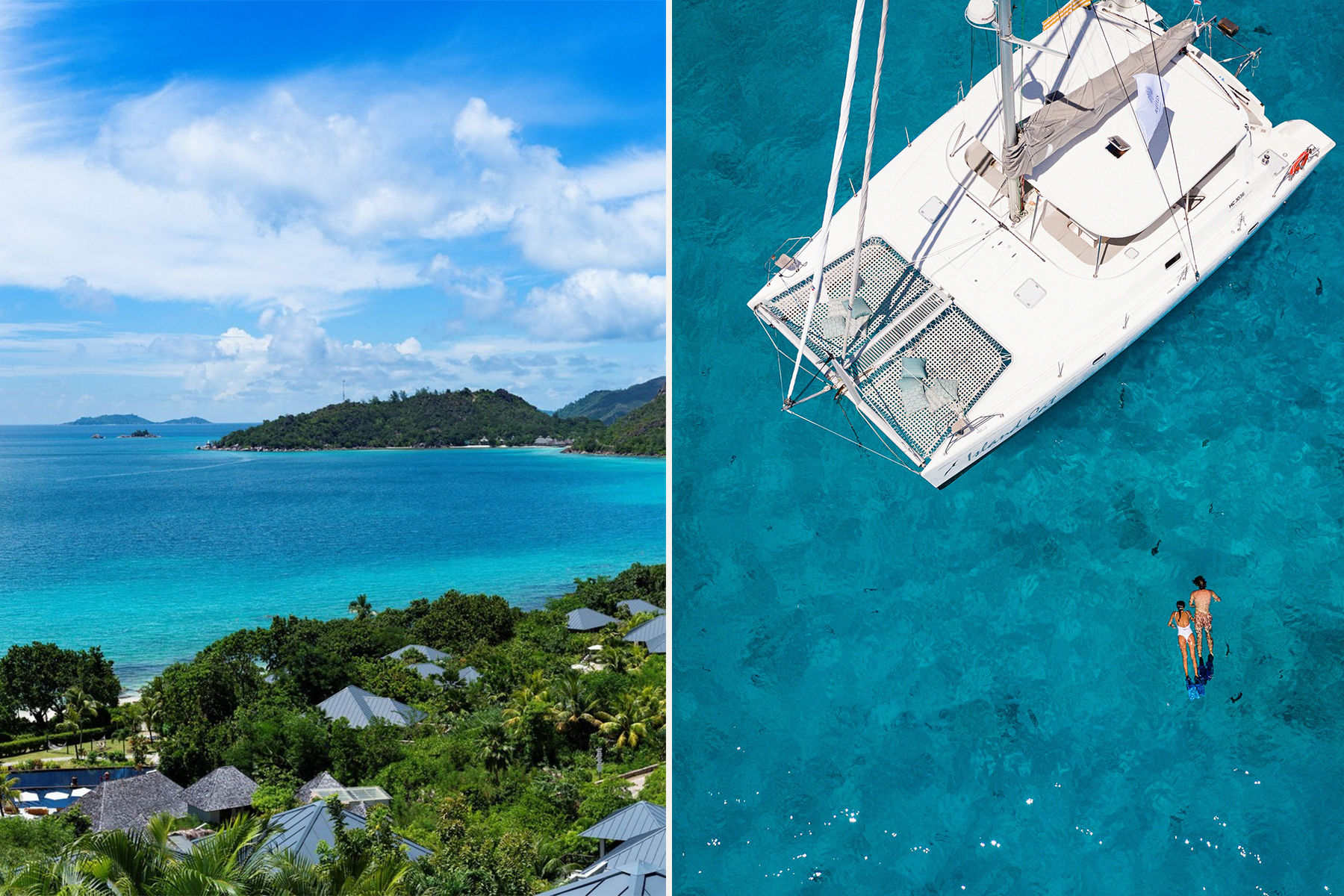
Images courtesy of Raffles Seychelles
Whale Sharks sail past Koh Samui
Whale Sharks majestically swirl around Sail Rock – seemingly unaware that they’re the key attraction of Koh Samui’s most popular drop point (especially between March-May and August-October). Because it stands alone in open water, this granite monolith has become a ‘marine highway’ that attracts silver-studded Chevron Barracuda, Bigeye Trevally and King Mackerel. No wonder it’s lauded among the best diving holidays in the Gulf of Thailand. But Sail Rock is perhaps most famous for the vertical, swim-through within its rock matrix, known as ‘The Chimney’.
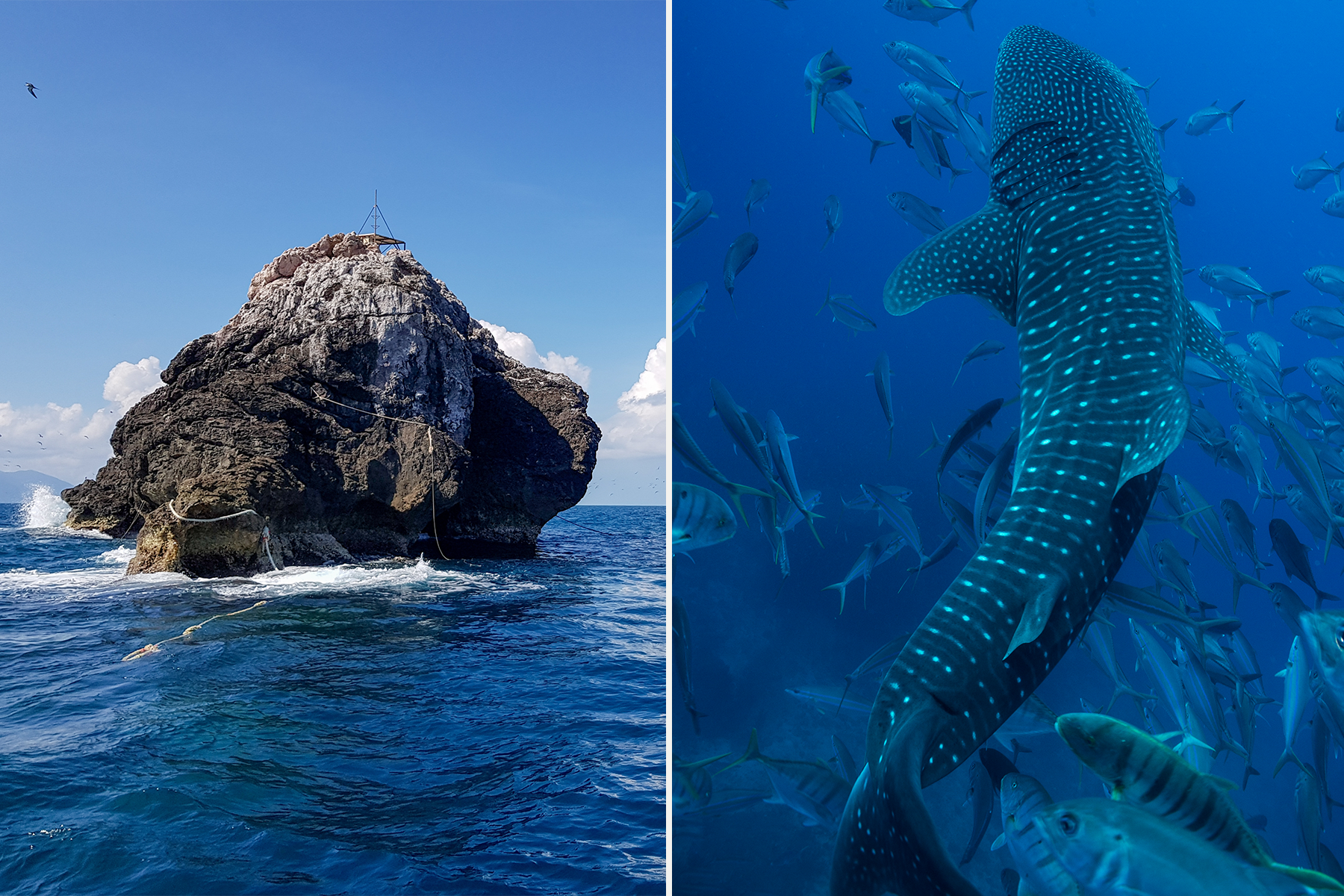
LEFT: Sail Rock, the Gulf of Thailand's most iconic dive site | RIGHT: A whale shark passes through the deep blue
A sumptuous stay at Six Senses Samui also serves as the gateway to Mu Koh Ang Thong Marine National Park. This collection of 42 karst islands, with their shallow coral gardens, is a playground for Long-nose Hawkfish, Green Turtles and juvenile Fusiliers.
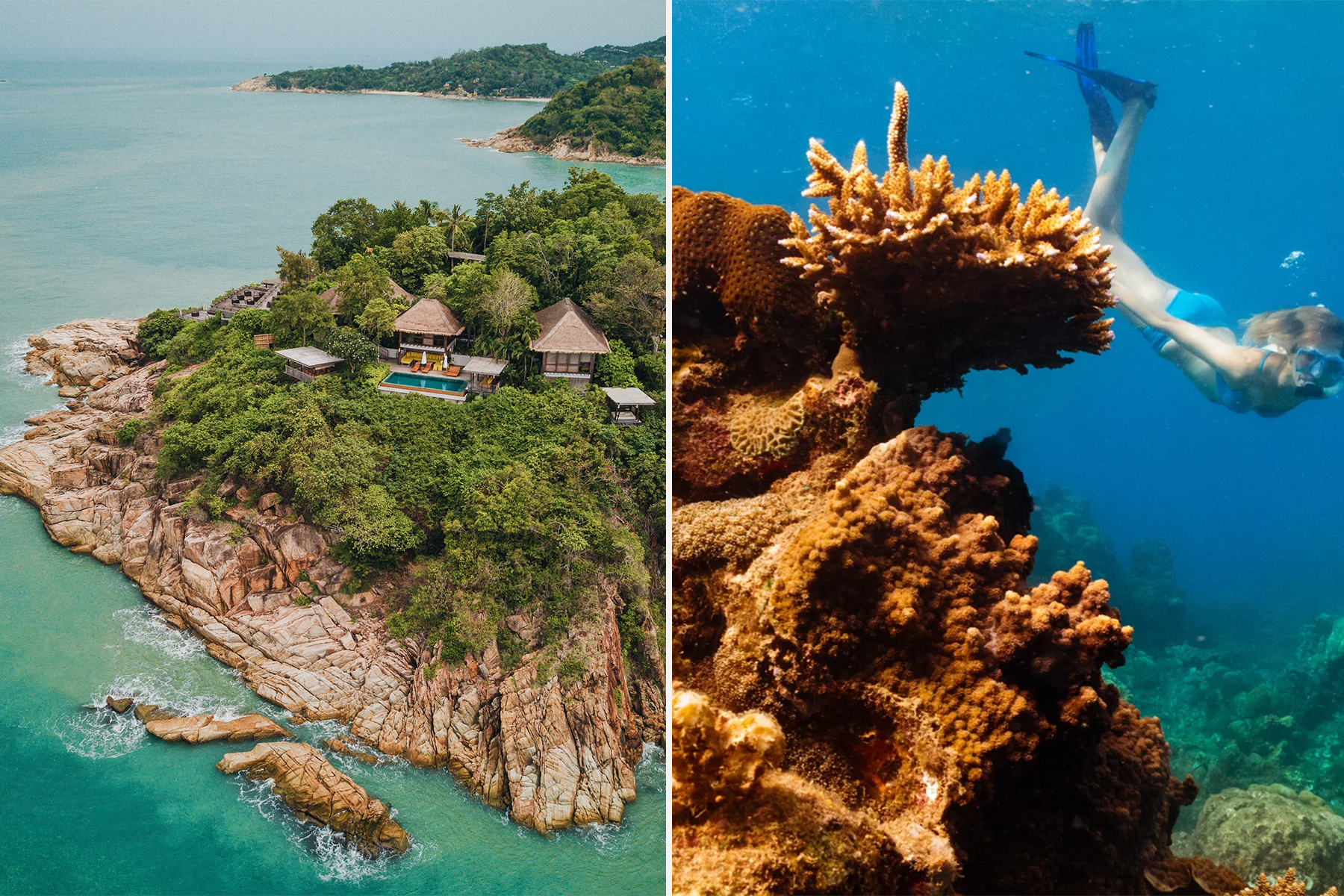
Images courtesy of Six Senses Samui
The Atlantic’s shipwreck capital
One of the world's most remote volcanic islands, Bermuda sits between an extensive underwater cave system and a shallow reef dominated by honeycombed and brain corals. Bermuda showcases some of the healthiest corals in the Atlantic that are covered in a forest of purple sea fans, fern-like rods and feathery plumes. The island’s picturesque pink sands are the work of Parrotfish that munch on algae, coral skeletons and crimson Foraminifera shells.
Bermuda is one of the best diving spots in the world with more shipwrecks per square kilometre than anywhere else. Many of its 300-odd shipwrecks (like the Hermes) rest in sunlit shallow waters that are suitable for novice divers.
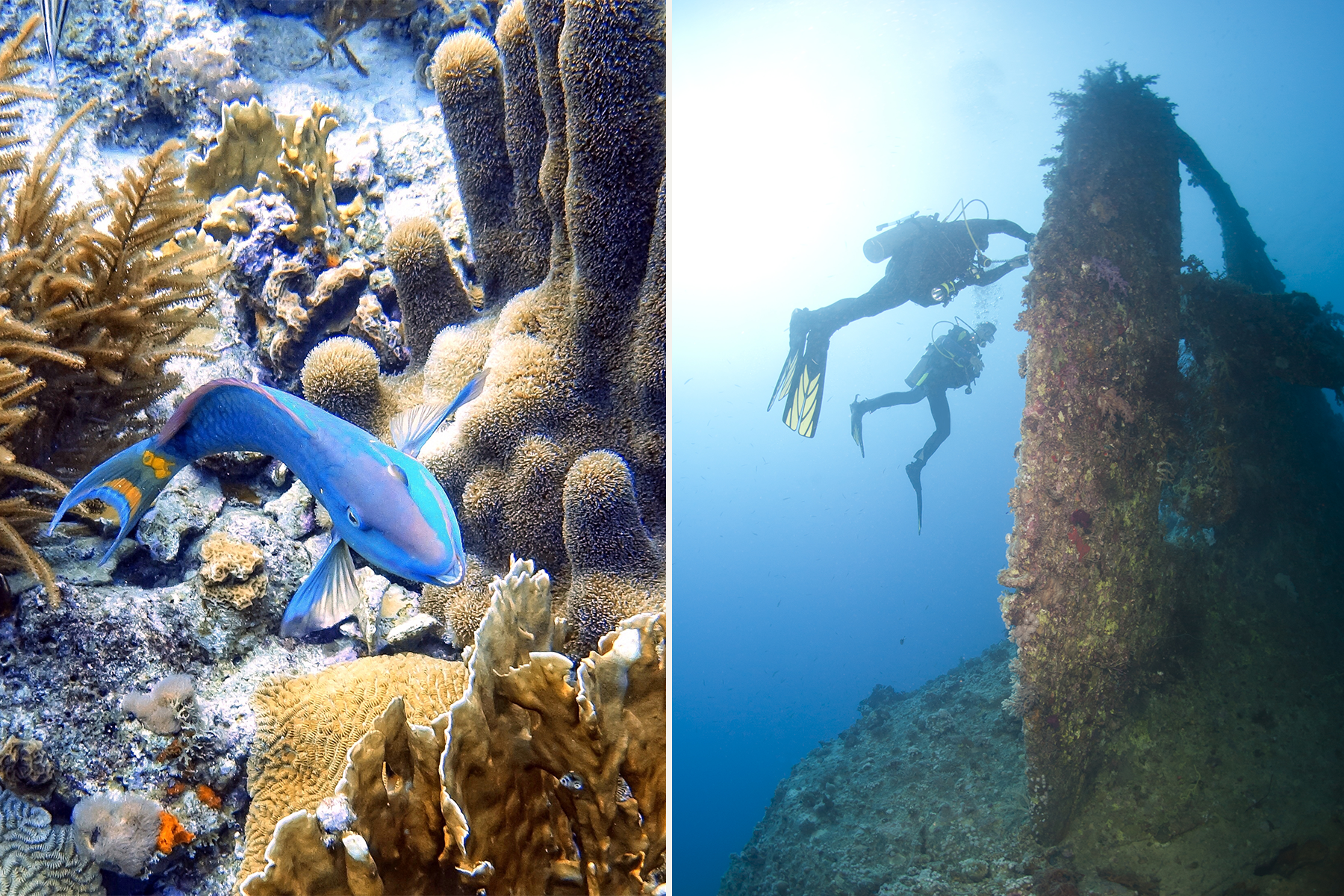
LEFT: A parrotfish among vibrant corals | RIGHT: A diver explores a historic shipwreck
Between dives, guests at the Hamilton Princess & Beach Club, affectionately nicknamed ‘The Pink Princess’, unwind in overwater hammocks within the private Beach Club.
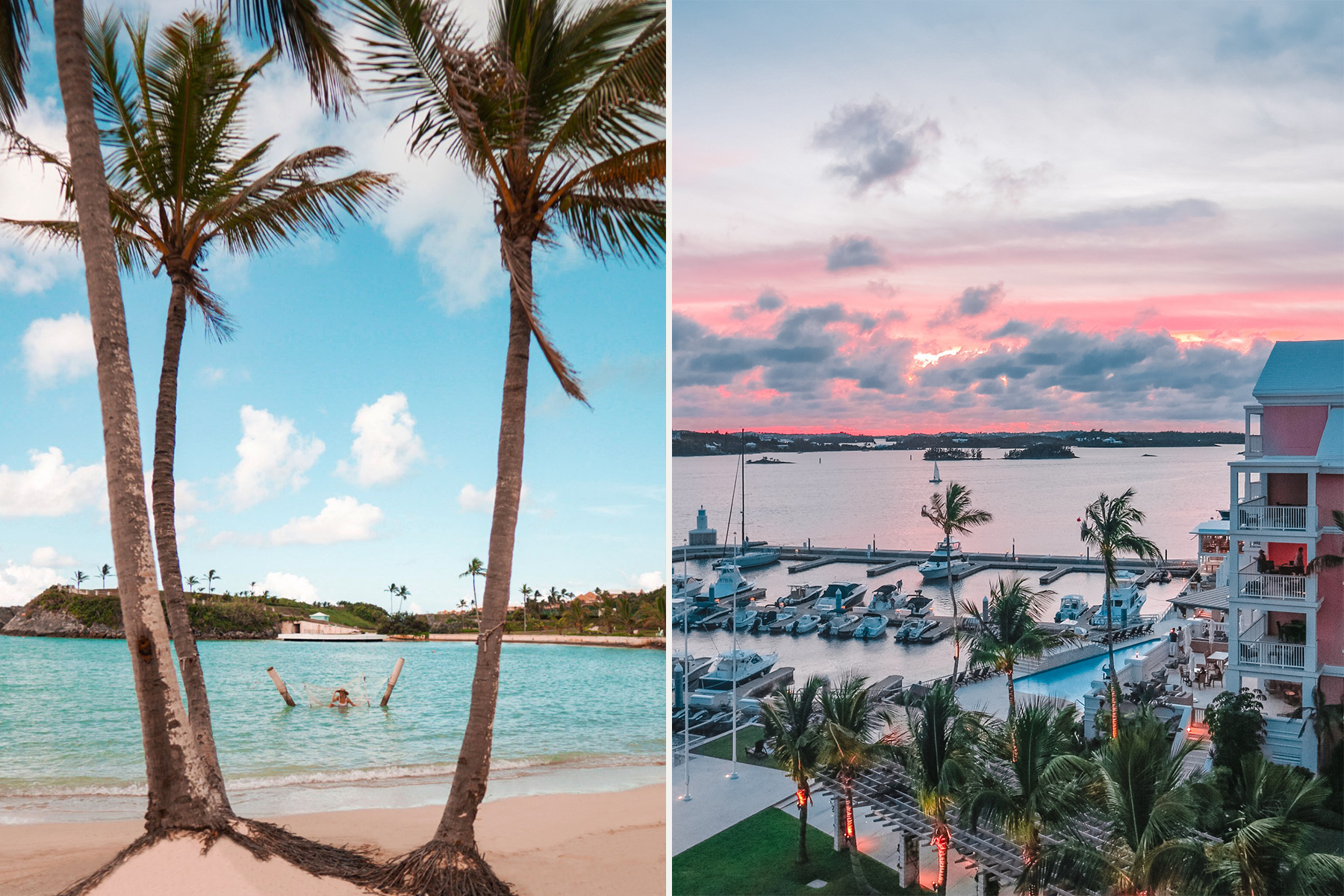
Images courtesy of Hamilton Princess & Beach Club
Mexico’s Mayan Cenotes
Mexico’s lush Riviera Maya reveals a subterranean world of thousands of limestone sinkholes and submerged caverns. These cenotes form the world’s longest underground river and underwater cave network. The Mayans revered them as portals to the underworld where their gods, spirits and supernatural forces resided.
The chambers are best explored by swimming, snorkelling or diving. When sunlight pierces through the crumbling cavern ceilings, their still waters offer unparallelled visibility exceeding 50 metres. Beyond the cichlids, tetras and blue land crabs, the highlight is navigating through a halocline – the visible boundary where fresh water sits atop denser saltwater, creating a glittery, otherworldly distortion.
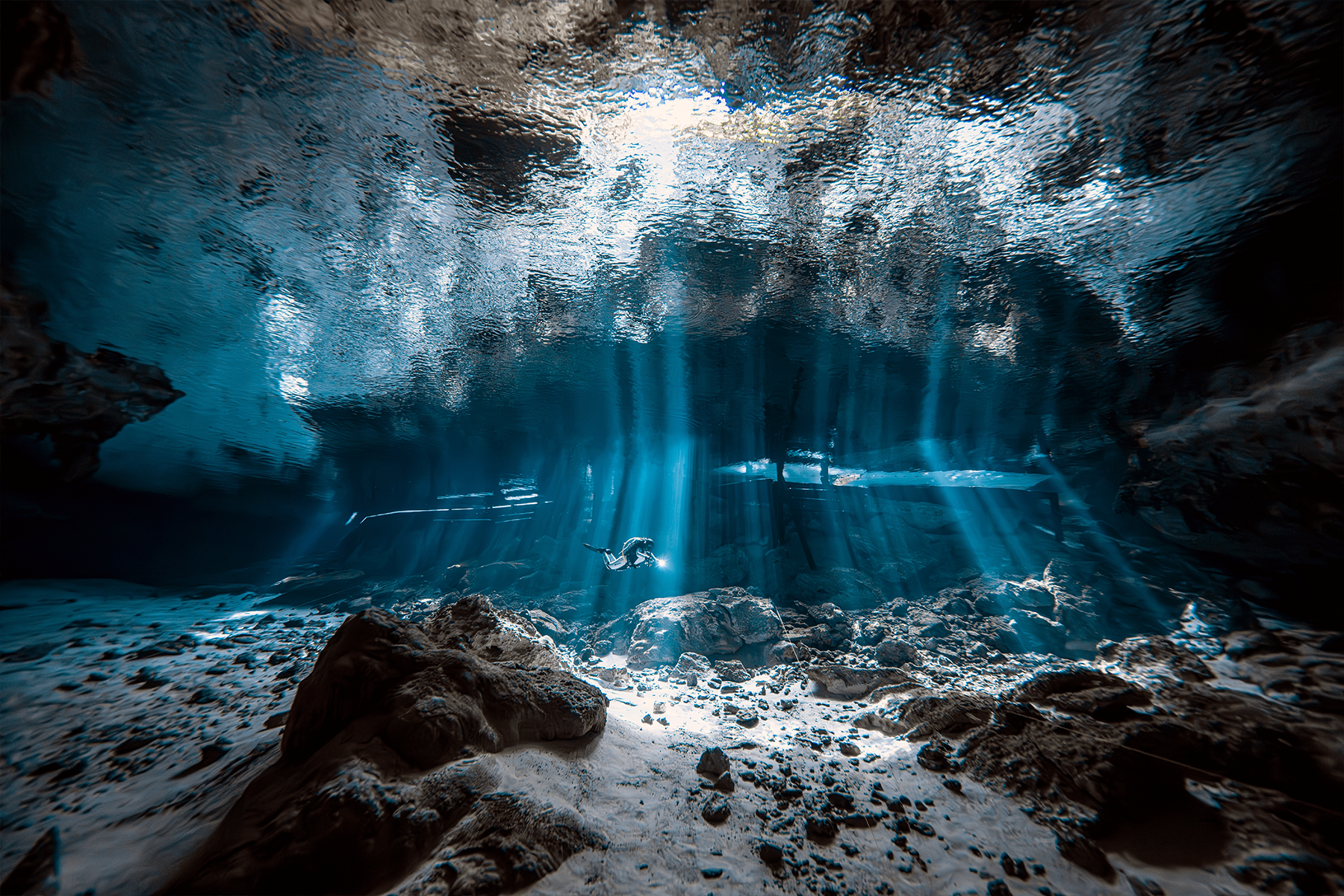
A diver explores the ethereal chambers of Cenote Dos Ojos in Mexico's Riviera Maya
The Banyan Tree Mayakoba offers private access to these magical ecosystems and organises excursions to a handful that are managed as ecotourism sites to protect the region’s natural and Mayan cultural identity.
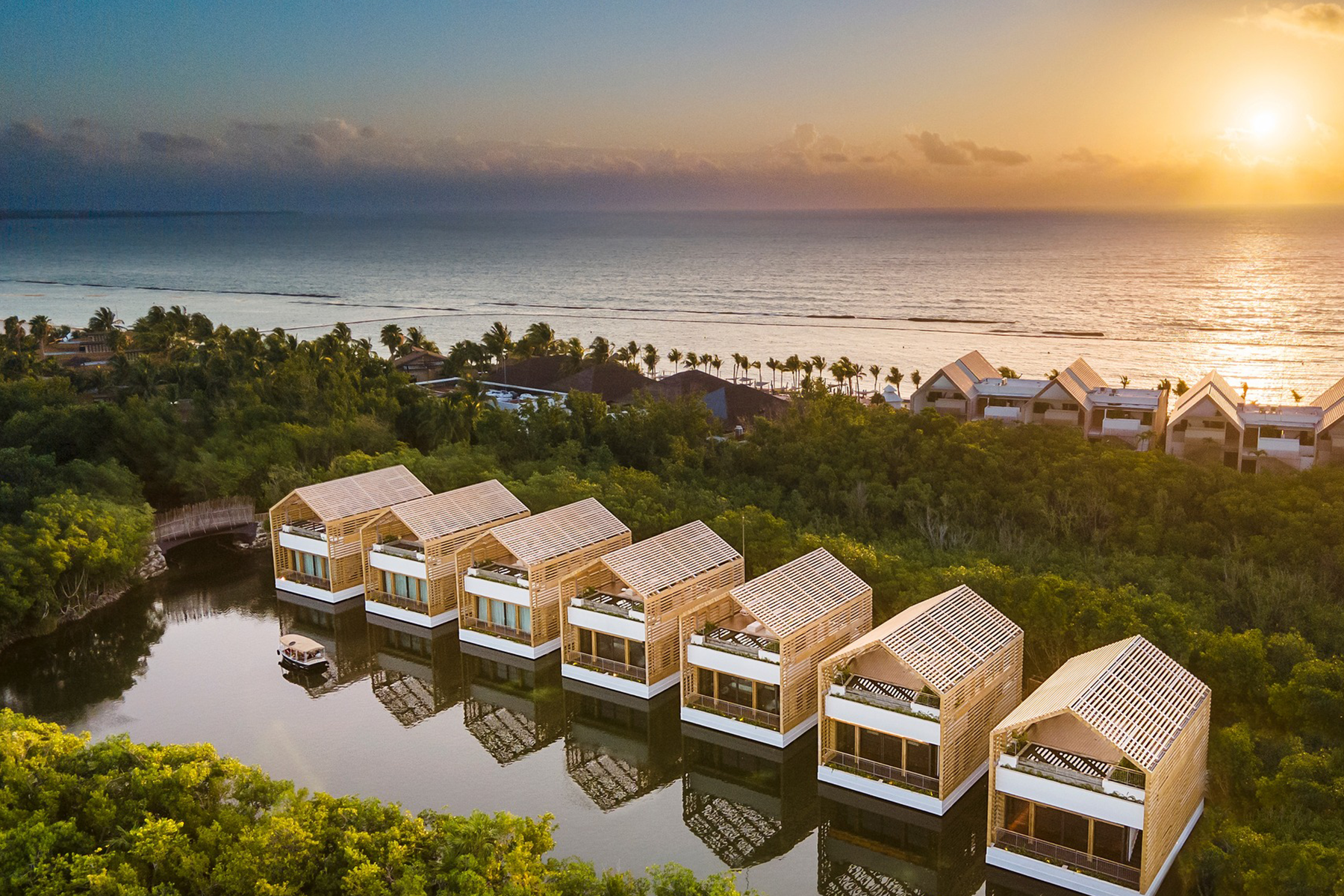
Image courtesy of Banyan Tree Mayakoba
For transformative expeditions into the ocean’s depths and beyond, ASMALLWORLD Bespoke Travel curates personalised journeys that prioritise sustainable luxury travel.
Become a member to join the conversation!
Become part of the world's leading travel & lifestyle community!






Comments